The packaging for the garlands was several months in the making. I researched packaging and spent many late nights figuring out what was budget friendly. As an entirely self-funded artist, every tiny piece of packaging matters, so working with a professional packaging designer was not an option. But I did want something really special that was still doable both financially and for me to be able to put together on my own.
The packaging began coming together - I’ll talk about the paper and the paintings in other posts - but for now I wanna start with possibly the most attention grabbing piece - the acetate insert on the back.
The idea to add the acetate to the packaging was always indulgent. It is entirely unnecessary for the packaging to work. But while I was working out the bags for the garlands, I was playing with old projector slides on my desk.
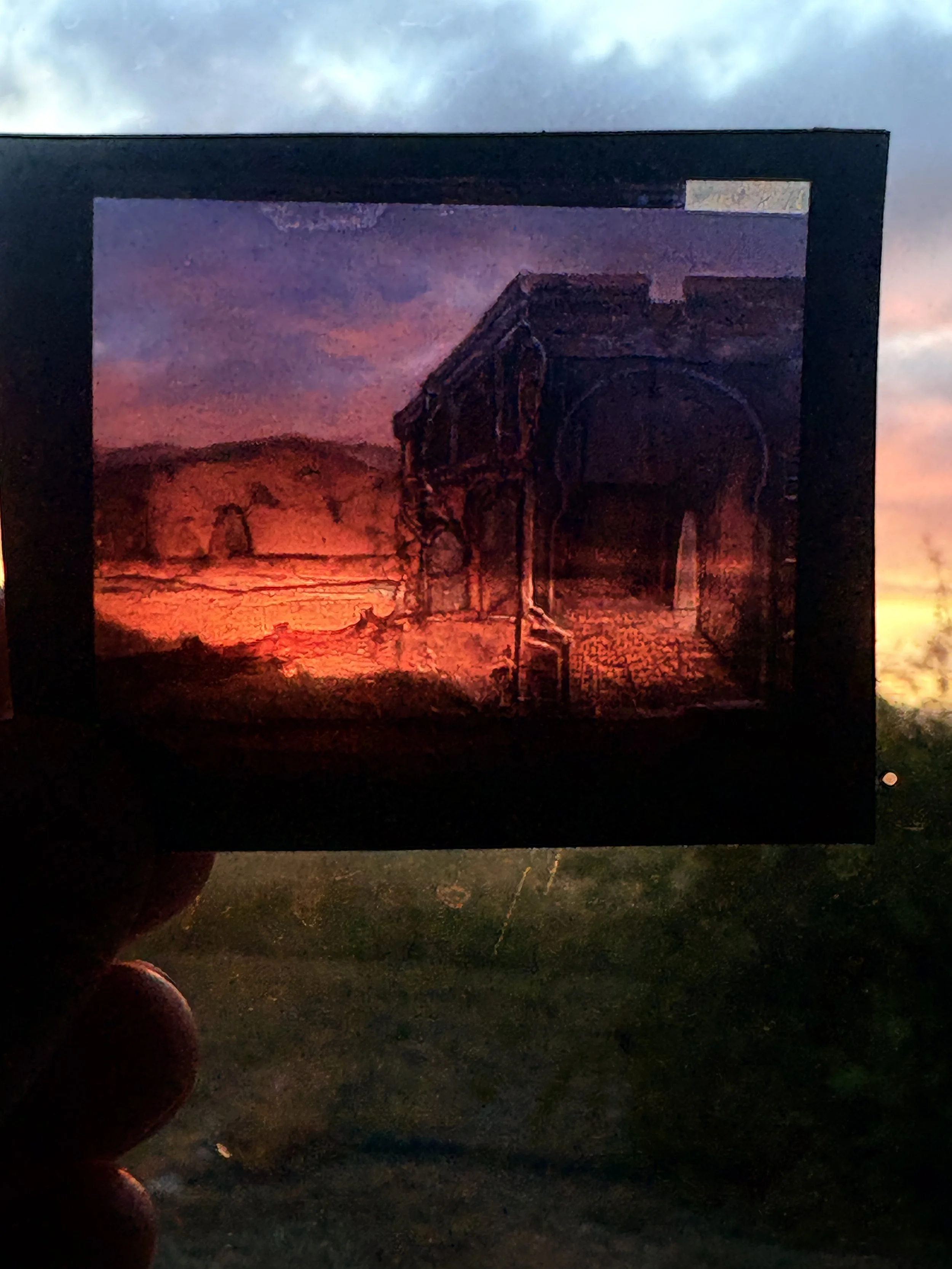
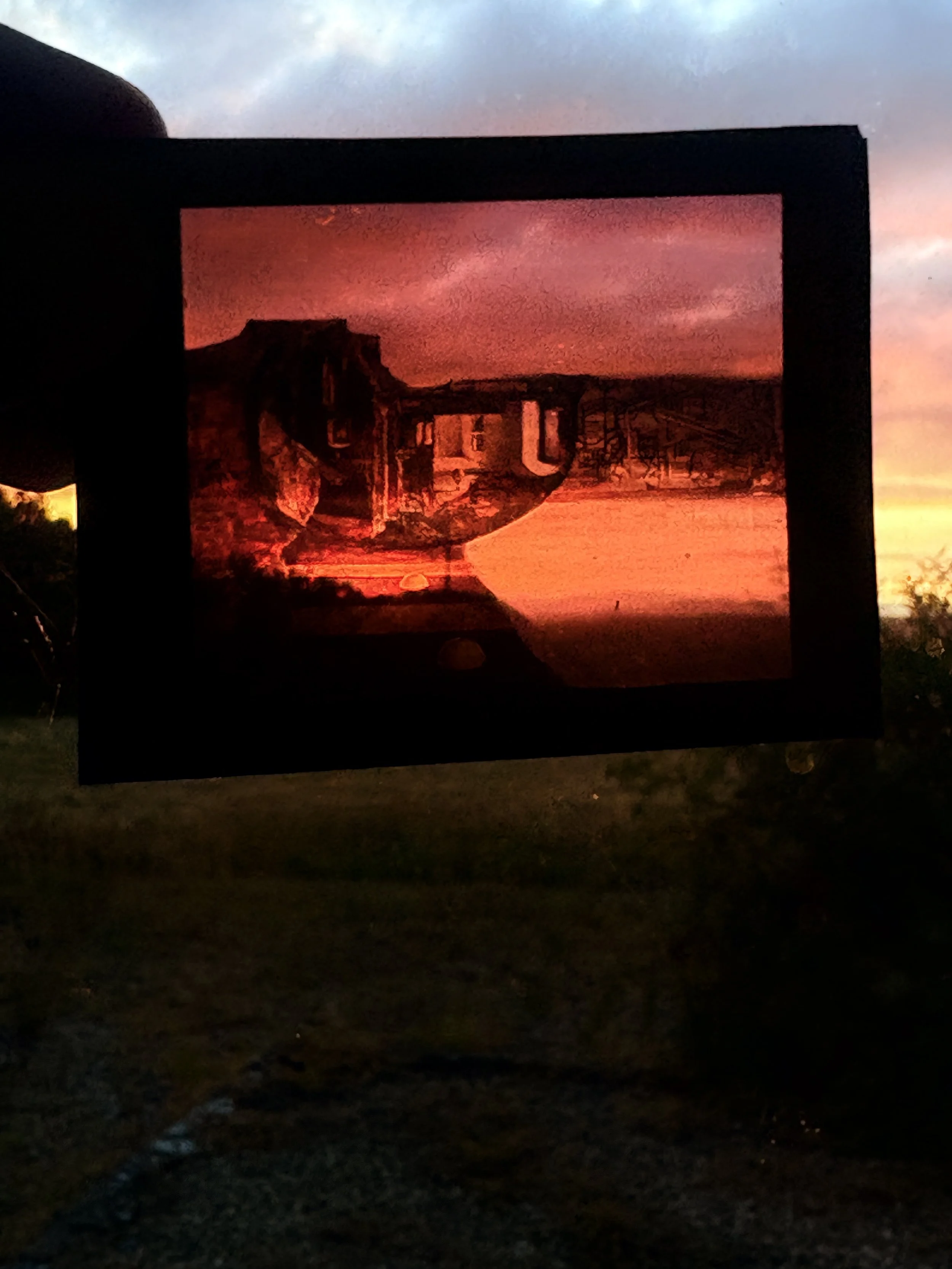
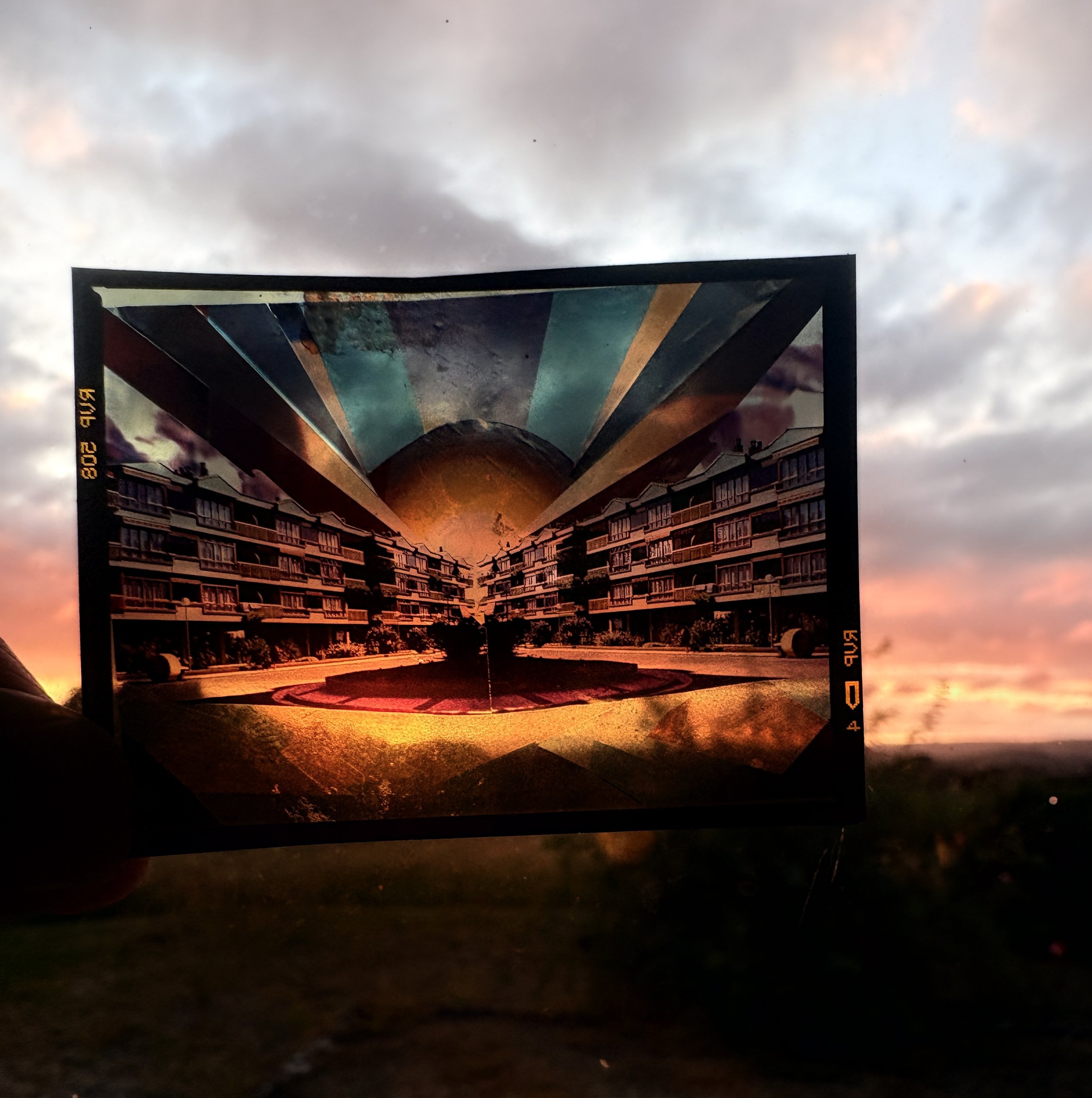
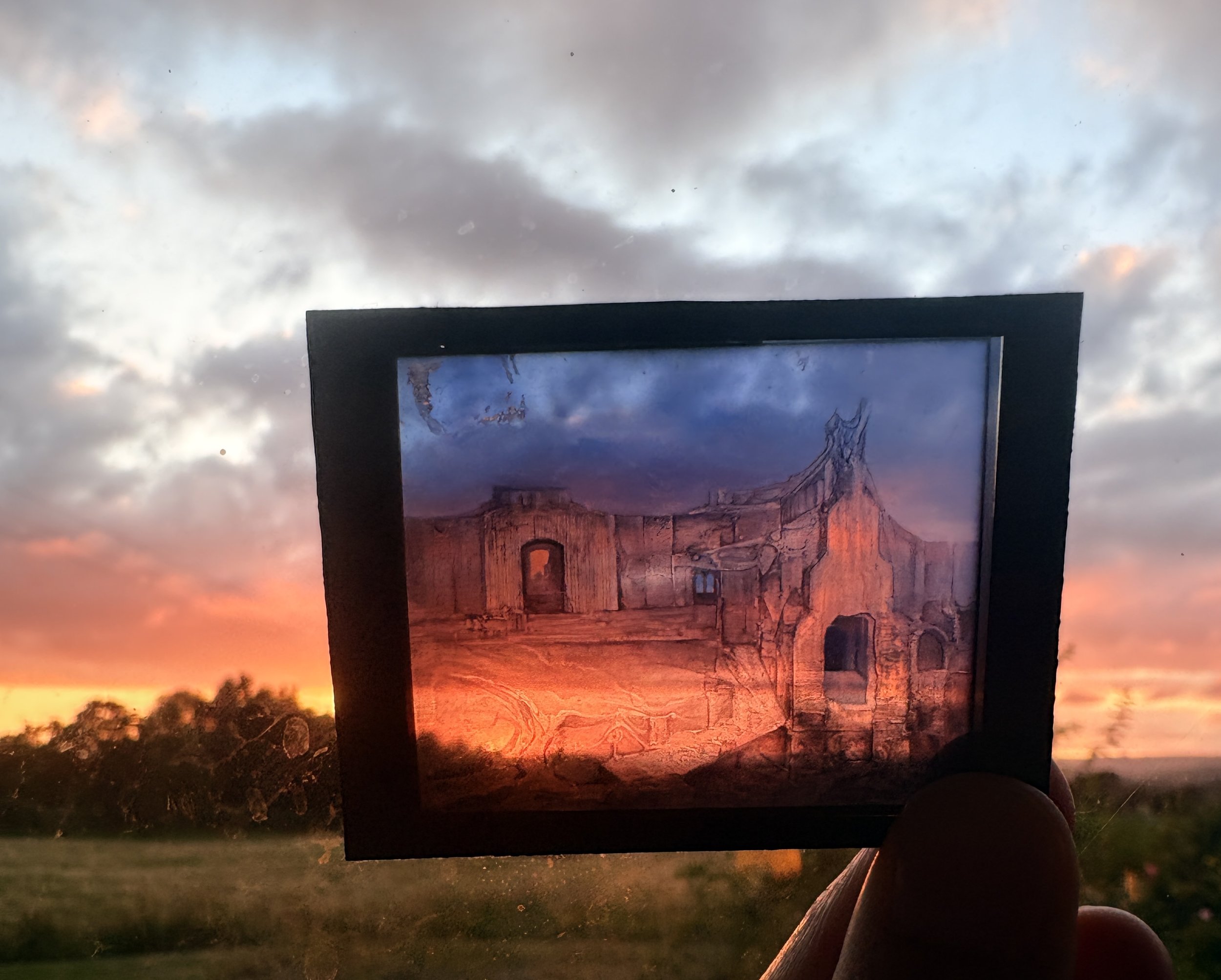
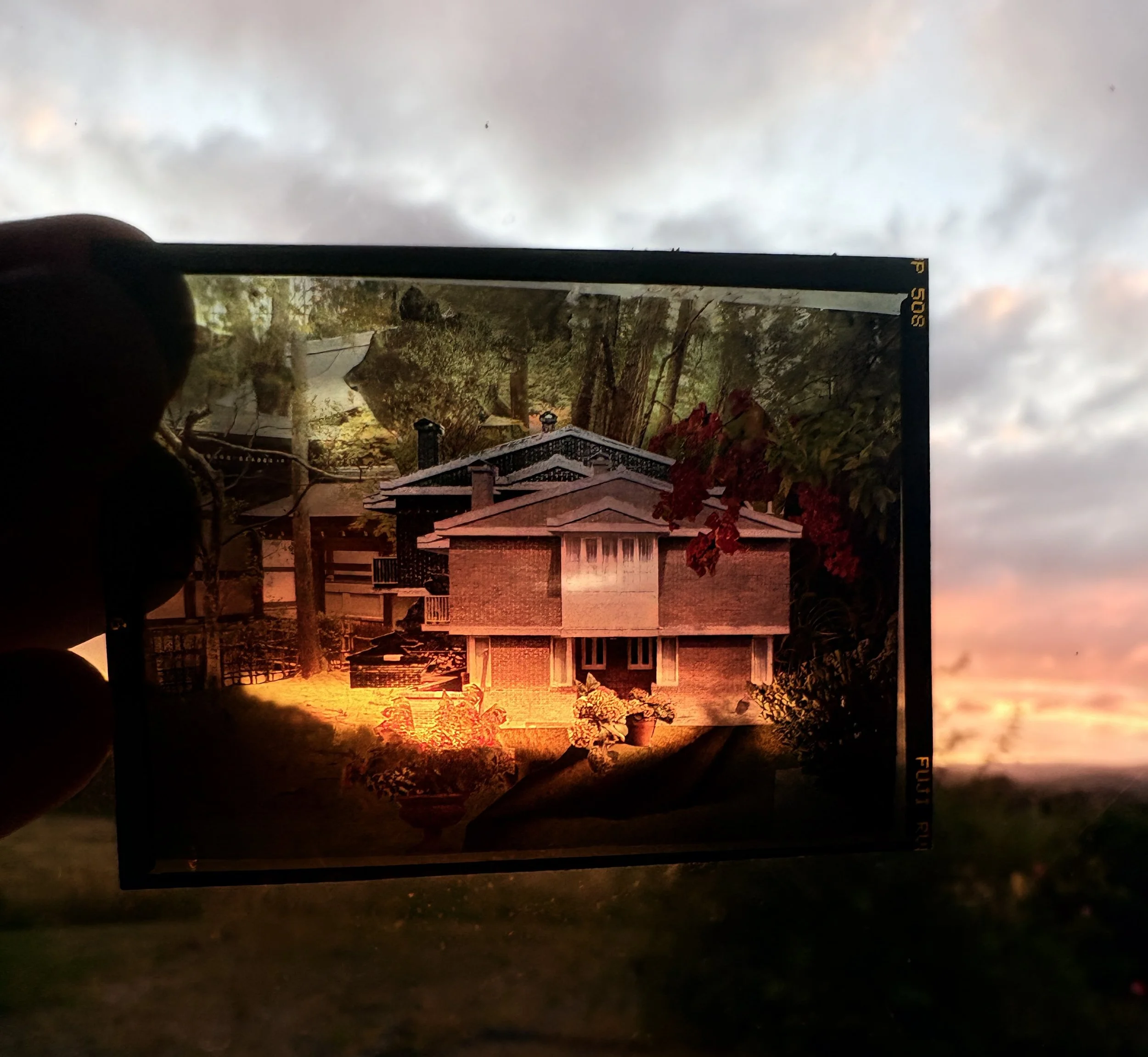
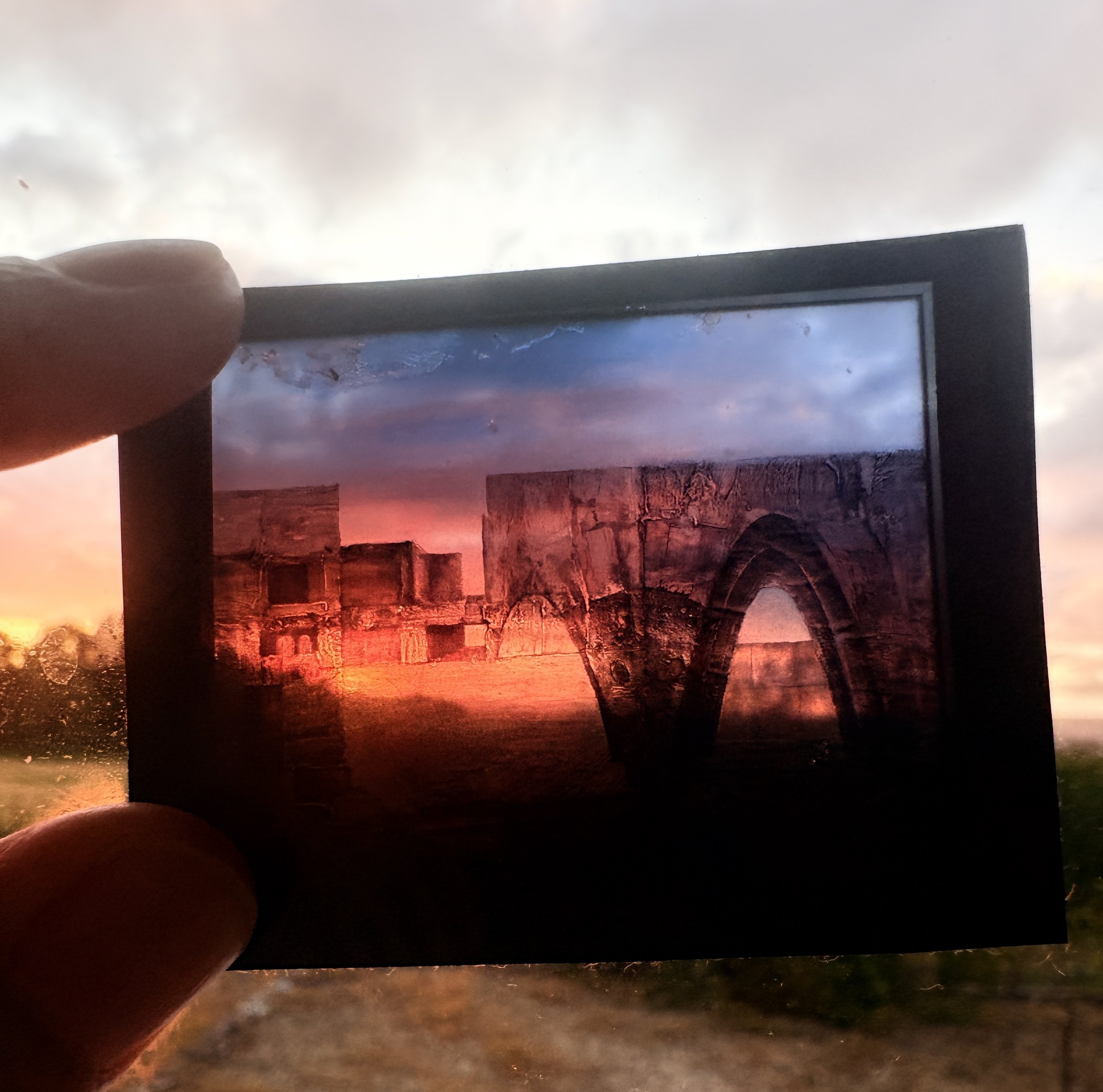
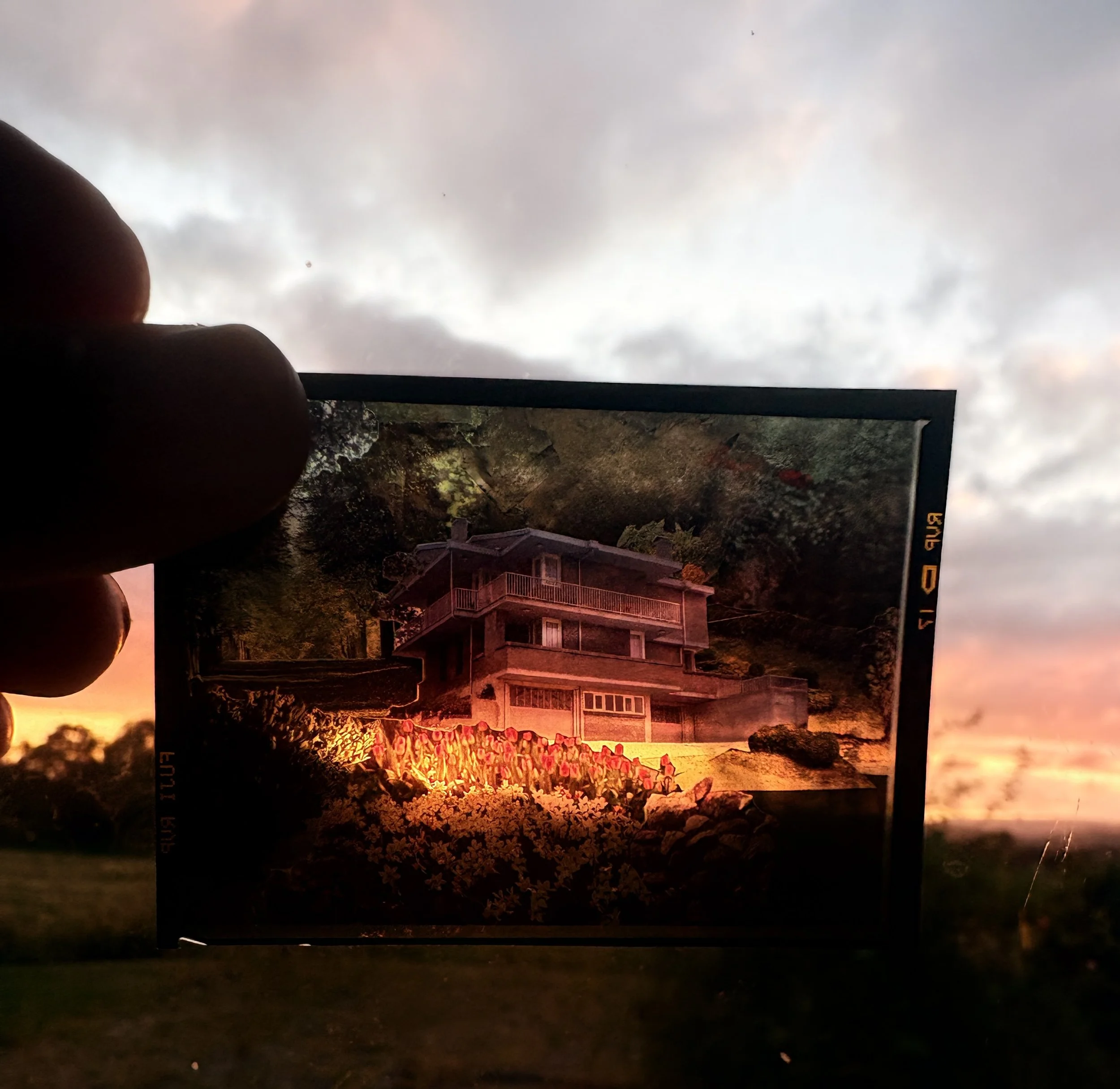
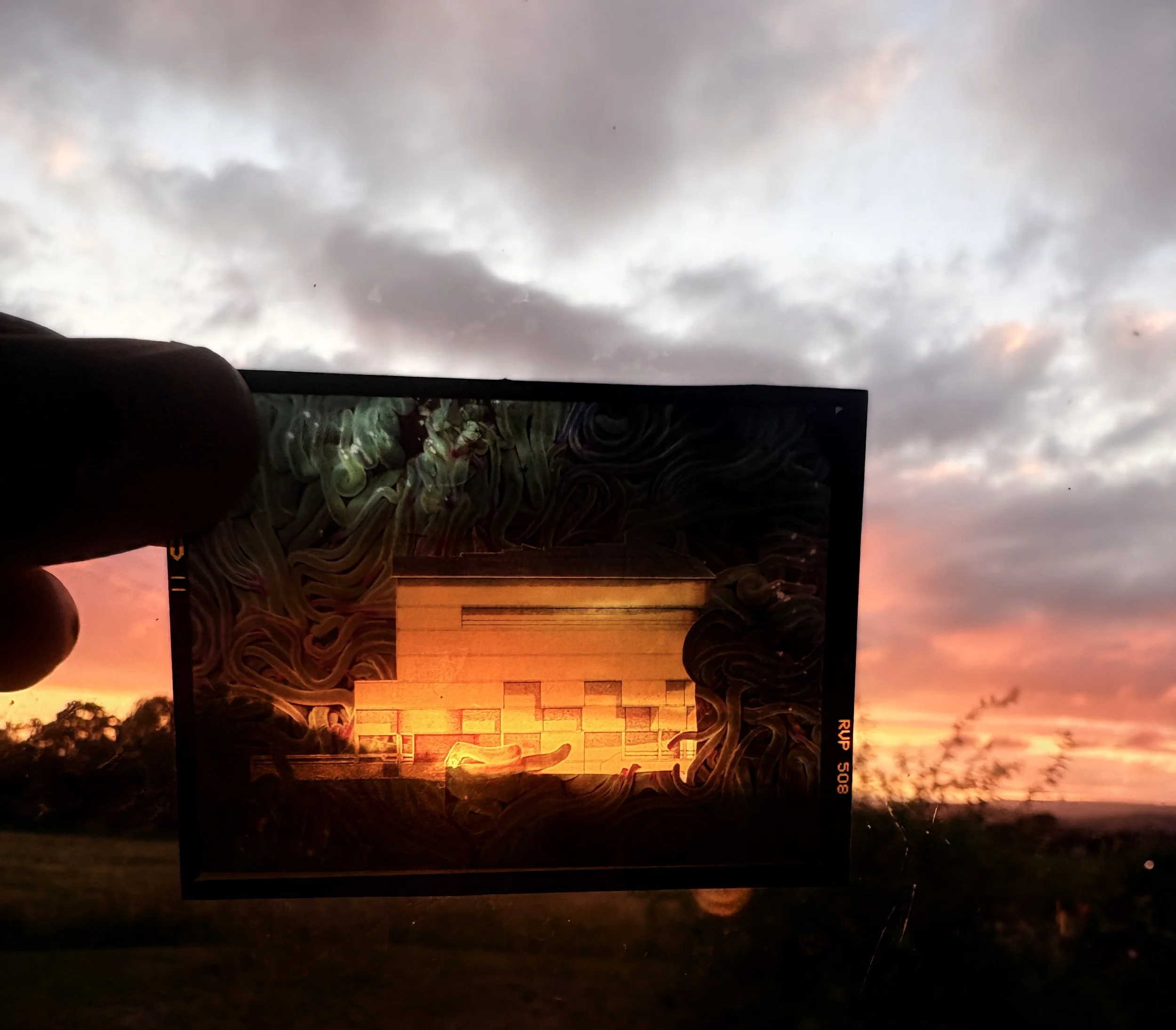
Here are the slides pictures against the sunset as I’m writing this.
I’d gotten the slides when working a comms job during the pandemic. One day I was organising some old boxes in the storeroom and found these architecture slides from the 70s. I asked if I could keep them and they have been sitting on my desk ever since.
While toying with the slide, I noticed what a good time it is spent watching the reflection cast by a desk lamp.
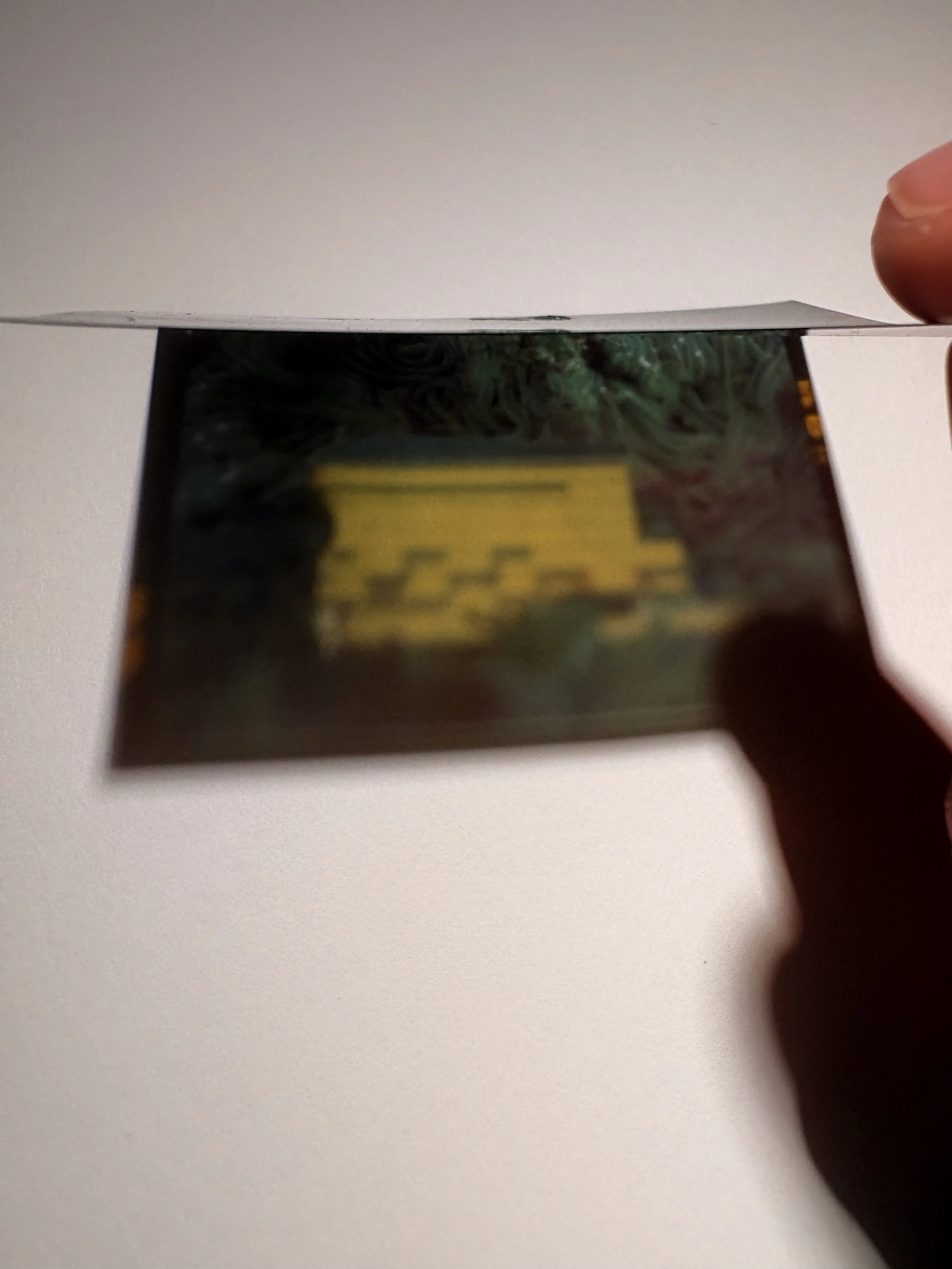
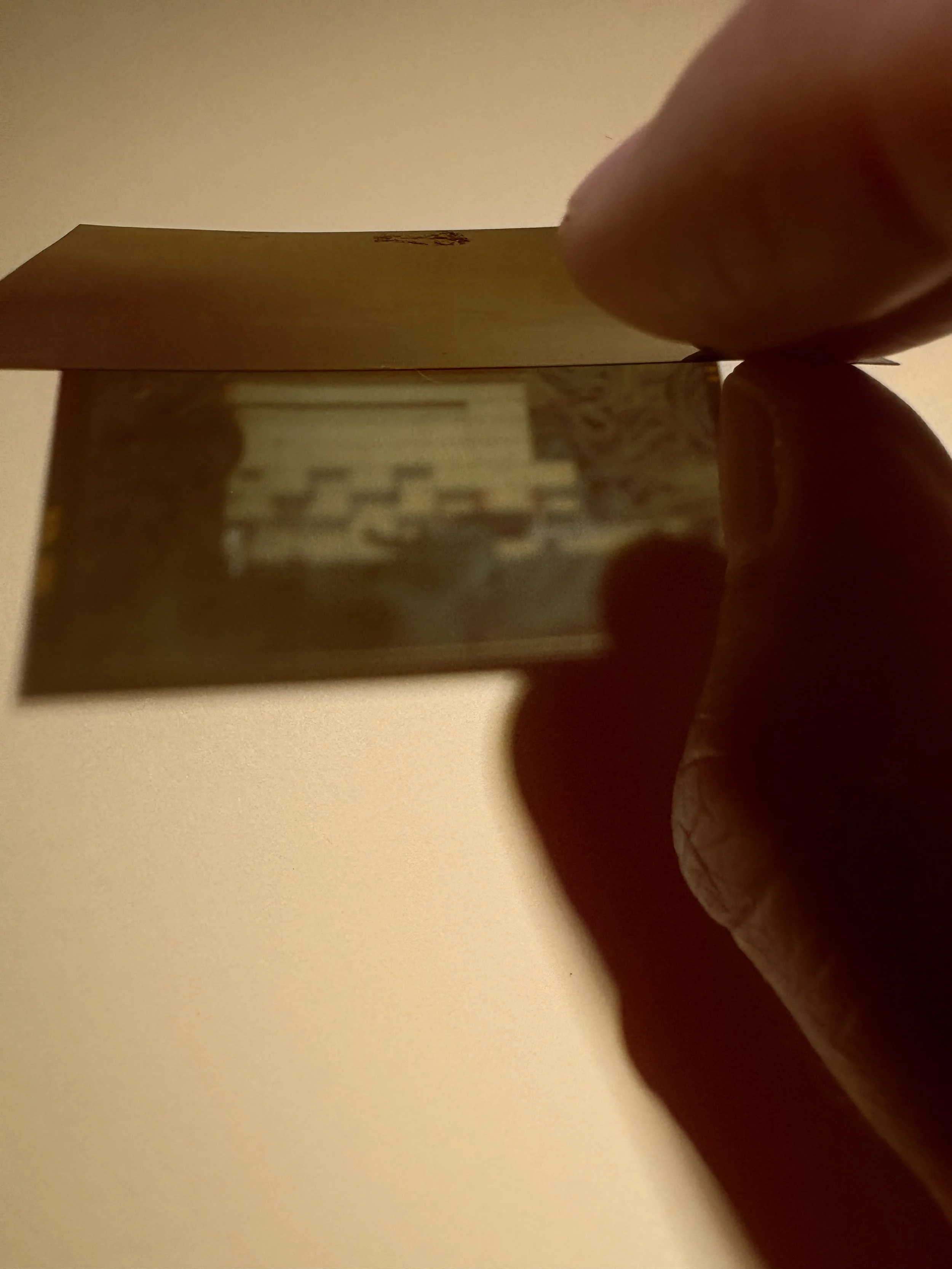
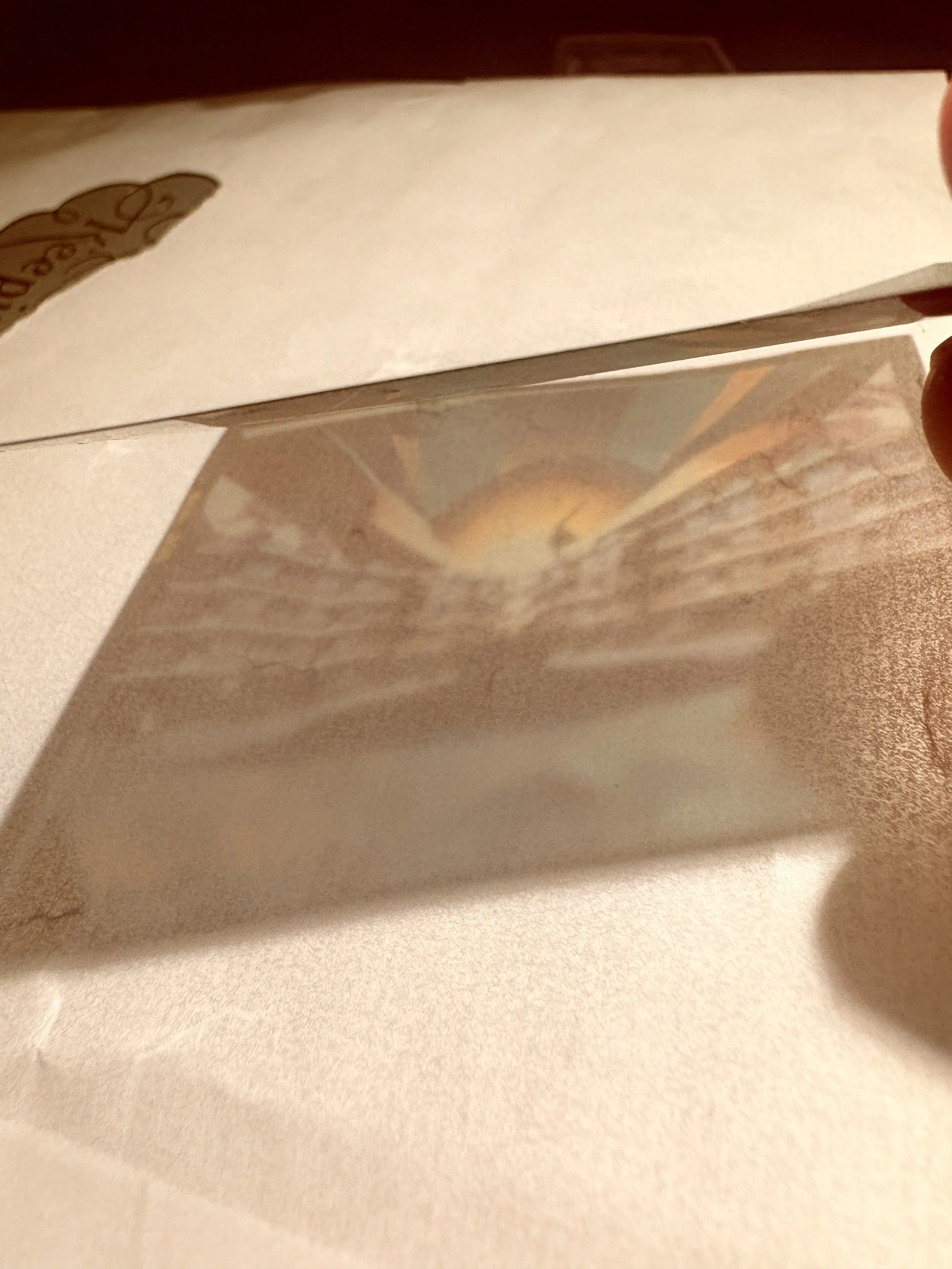
I did a bunch of research and discovered that the cost to print real slides would be way too expensive as an indulgent piece of froufrou on my garland packaging.
So I researched more and landed up with acetate. Thanks to Saxon Digital — not sponsored — I was able to print sheets of acetate and add this to the garlands at pennies per garland.
Why?
Because I am a sucker for packaging, I’m a sucker for little wonderous things, I’m a sucker for colour and light and how they interact, and adding this to the packaging seemed so undeniably me that it wasn’t a question not to. Acetate is fairly low impact on the environment, the core material is cellulose from wood pulp.
What does it look like when it arrives?
I get sheets of it at a time to keep it so cost effective. But equally I can’t get too many because I always run smallish batches of garlands as the flowers are available based on season, climate, and harvest - more on that in my garland making blog post.
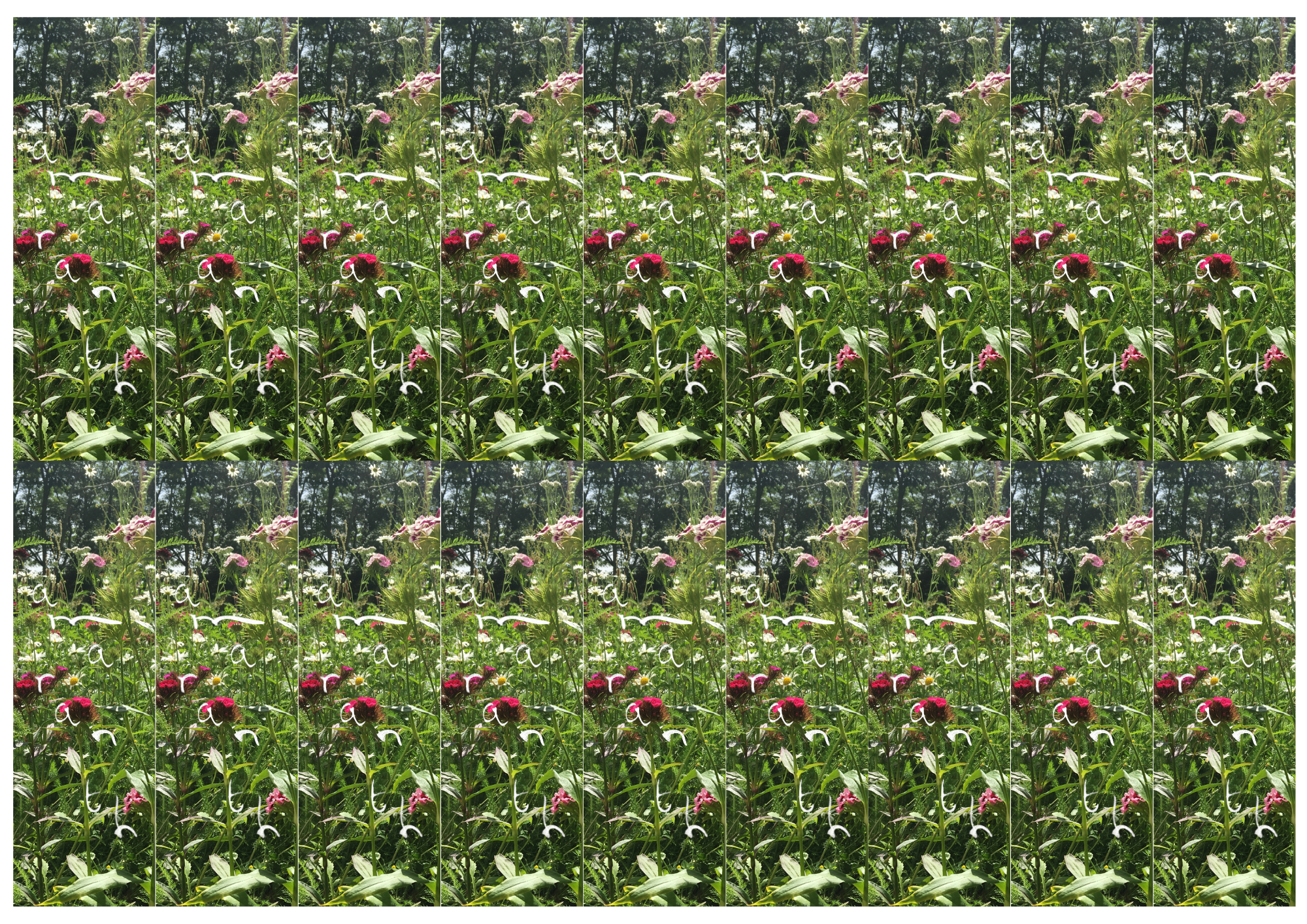
Amaranth Acetate Insert
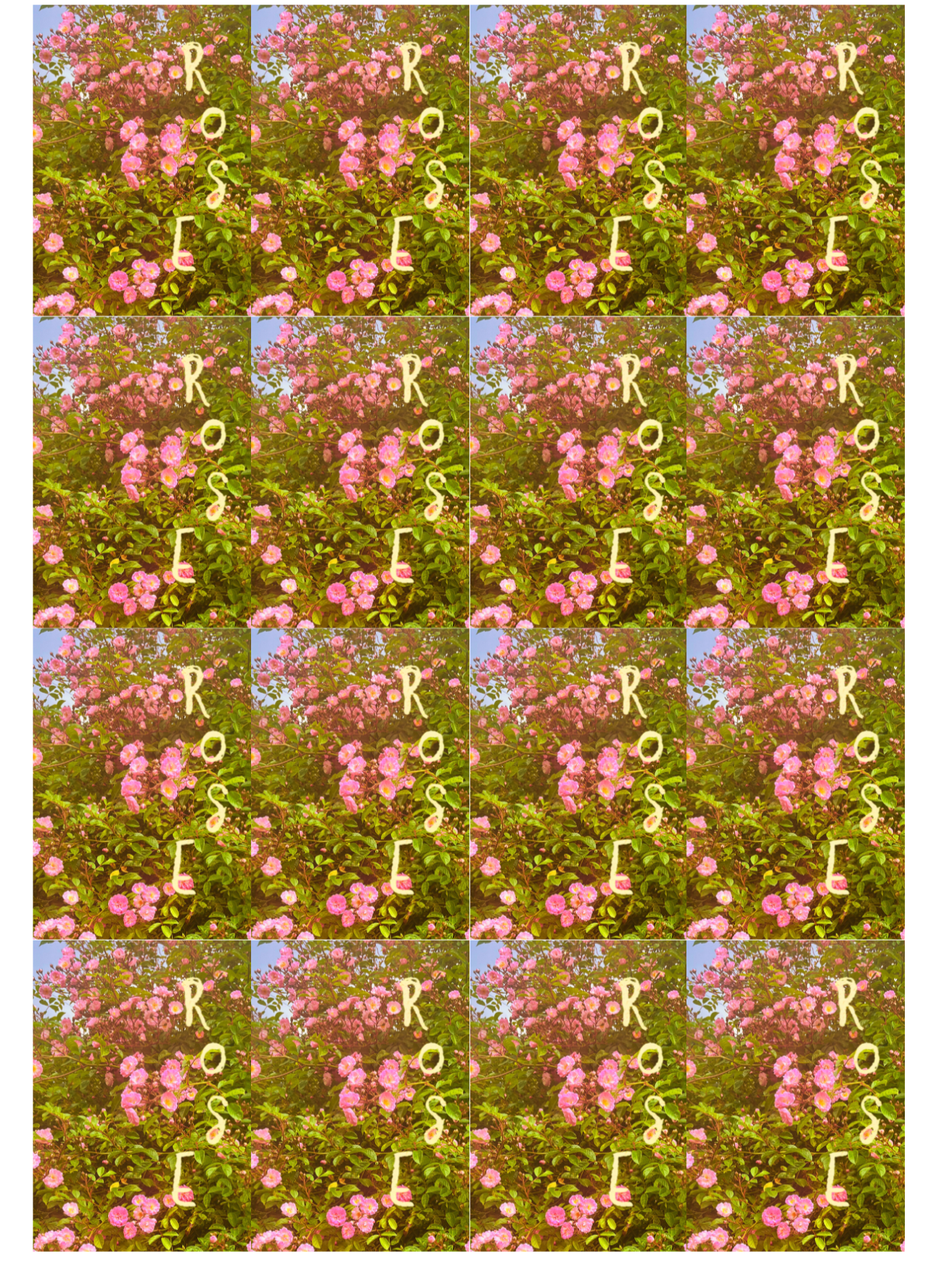
Rose Acetate Insert
I am still enchanted when I play with the packaging. Depending on the light — the acetate doesn’t always cast a reflection, but I kind of love that, because it means you have to seek the light, you have to find the right angle, more specifically — it is analogue — and in this world of digital screens and low effort, immediate reward art consumption, it feels important to reach out for reminders of the realities of atmosphere, light, matter, mass.
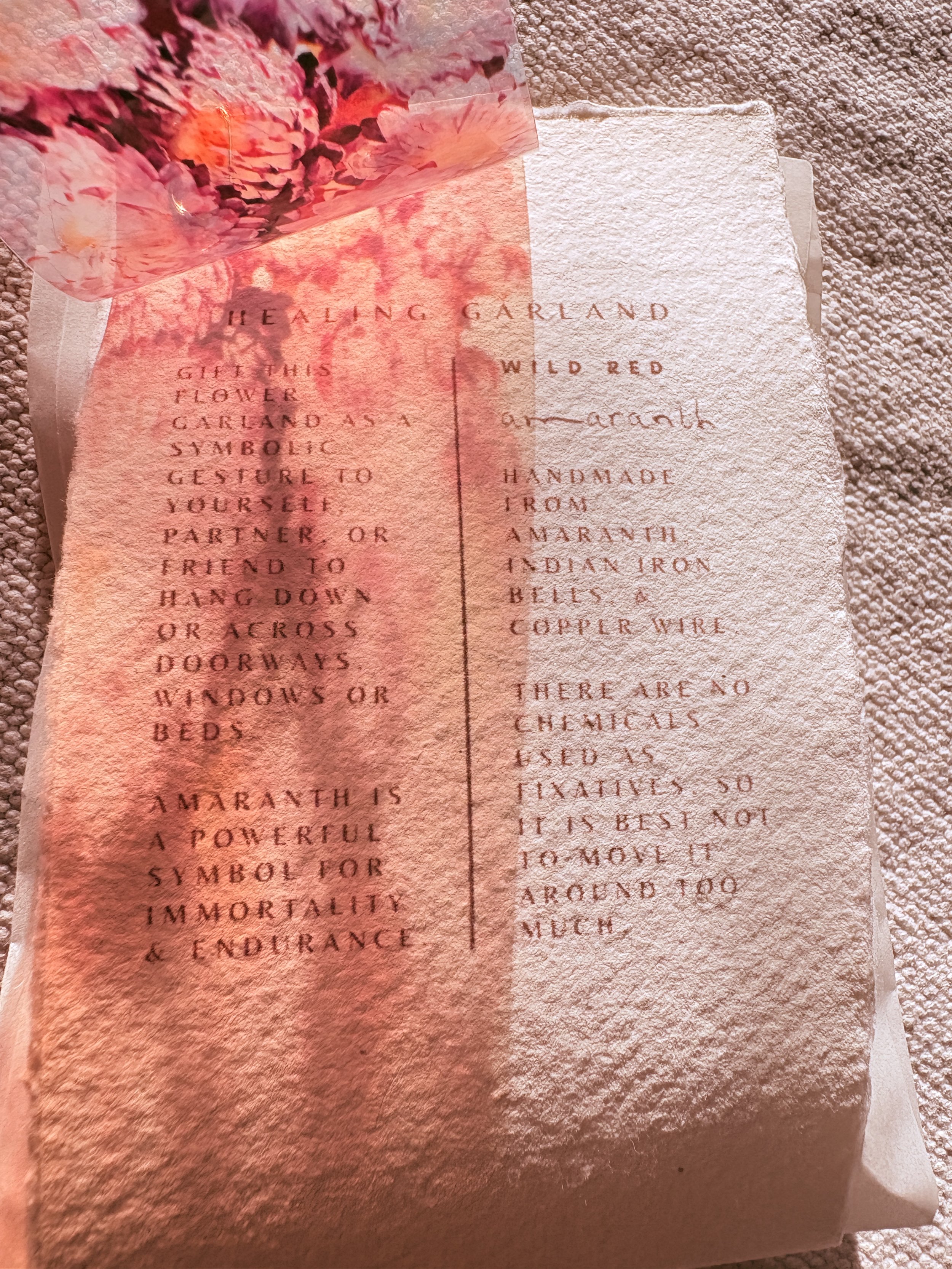
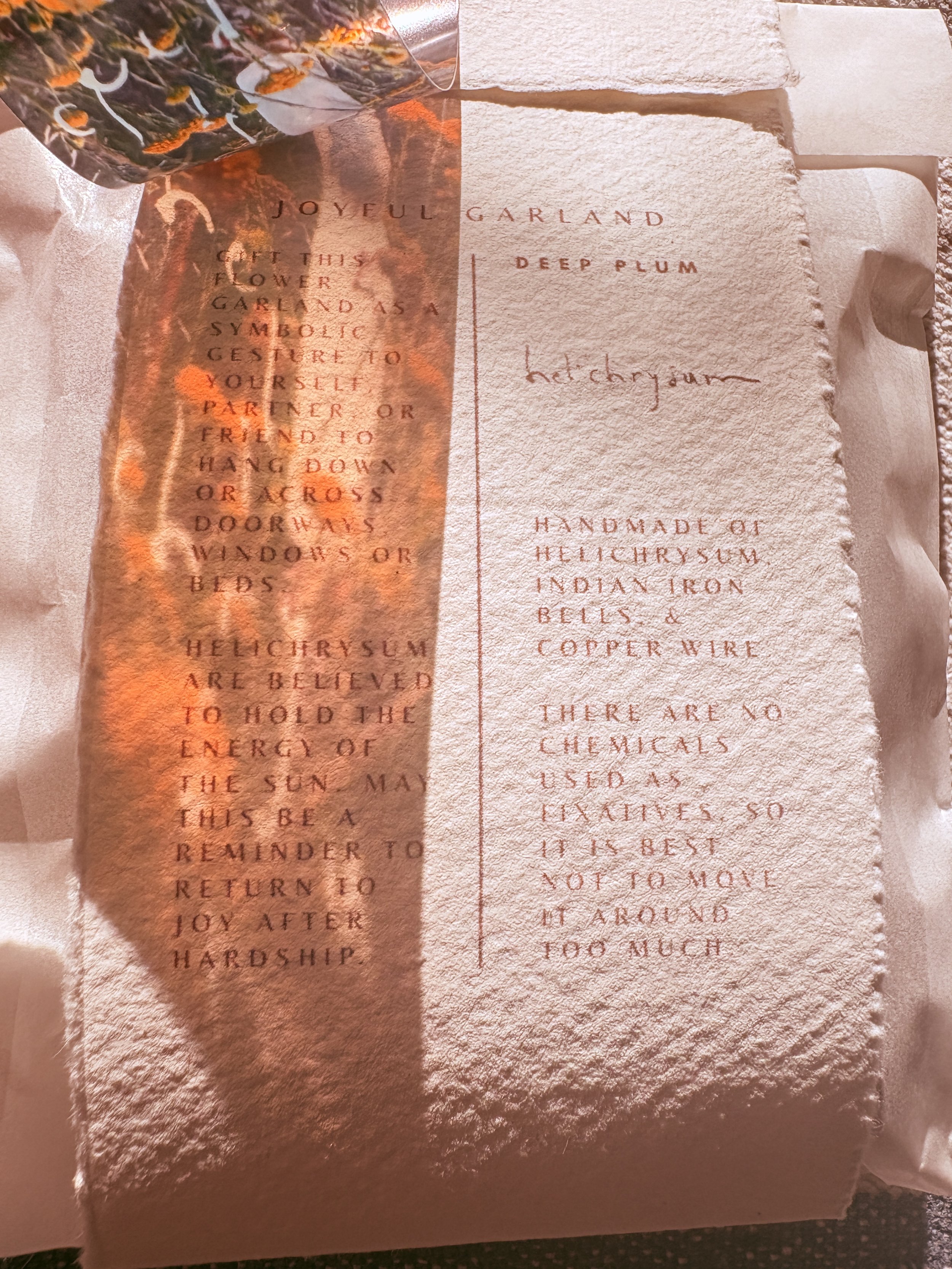
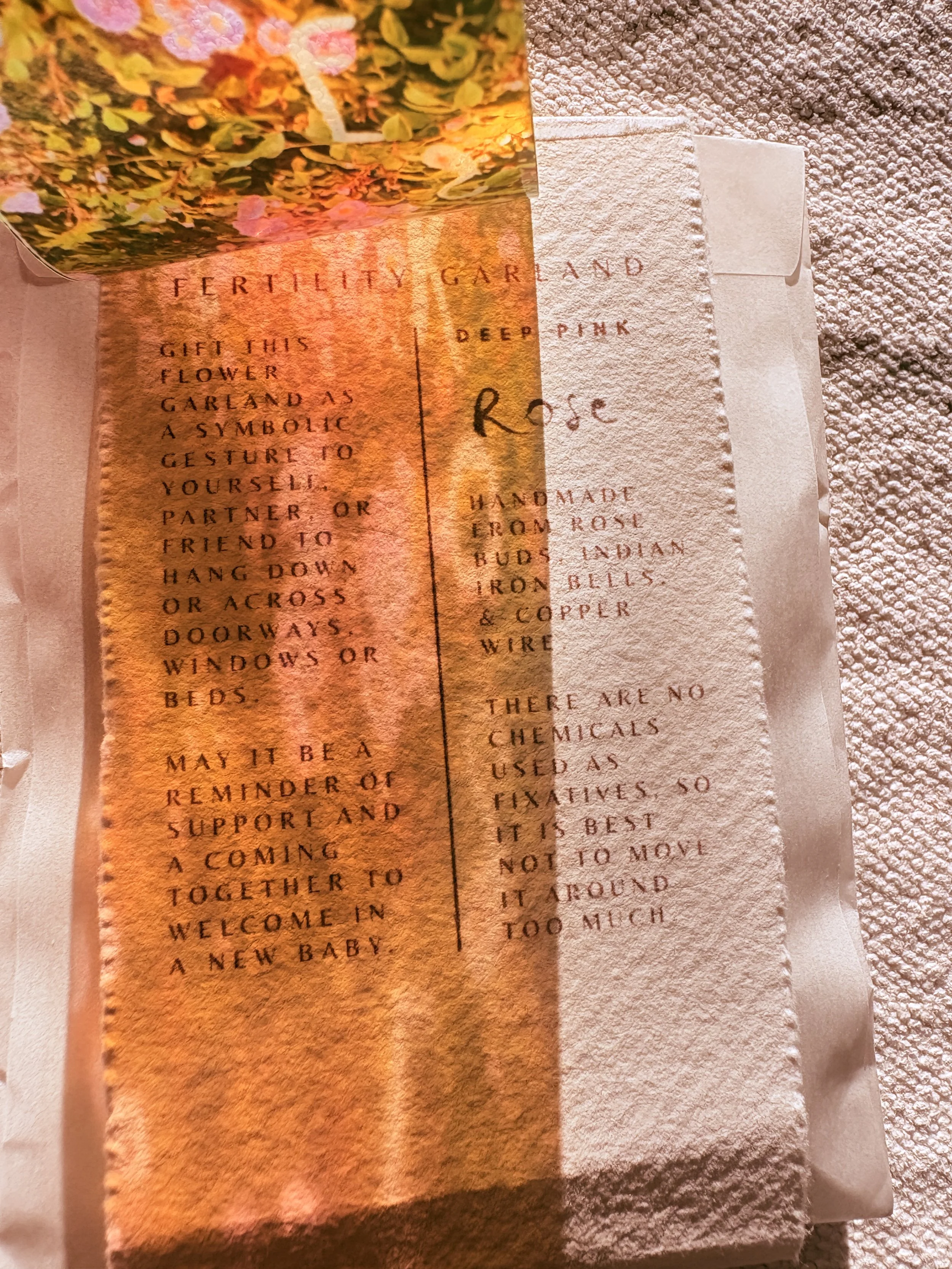
Even here in the photos of the reflection of the acetate on the packaging — I’m aware how much less magical it looks on a digital screen. There is something about the transitory nature of the real-life reflection that creates that little heart squeeze of wanting to grasp something intangible.
I hope that some people who have bought the garlands have delighted in the acetate inserts as much as I have. There is no expectation of what to do with them. Keep it in a drawer of treasures, throw it away, use it as decoration on a gift, or place it against a window, whatever works for you.
The video below is me assessing the use of tracing paper vs the acetate. As you already know, the winner was clearly acetate, but I really do like the effect of the tracing paper and hope to use it in another project.